
 }
}

Hybrid Cloud Management: Benefits, Challenges & Best Practices

Praveen Kumar
Contents

- What Is Hybrid Cloud Management?
- Why Businesses Are Moving Toward Hybrid Cloud Models
- The Growing Complexity of Hybrid Cloud Operations
- Simplify Your Hybrid Cloud Operations
- Key Benefits of Hybrid Cloud Management
- Centralized Visibility and Control
- Improved Scalability
- Better Security Management
- Cost Optimization
- Enhanced Application Performance
- Support for Digital Transformation
- Security Challenges in Hybrid Cloud Environments
- Misconfigured Cloud Resources
- Identity and Access Management
- Compliance Requirements
- Data Protection
- Building an Effective Hybrid Cloud Management Strategy
- Assess Business Requirements
- Define Governance Policies
- Prioritize Security
- Invest in Monitoring and Observability
- Embrace Automation
- The Future of Hybrid Cloud Management
- Final Thoughts
- Build a Secure & Scalable Hybrid Cloud Infrastructure
Technology. Insights. What's Next.
Discover insights on AI, software, cloud, digital transformation, and emerging technologies shaping the future of business.
Share


Businesses today need to maintain three core elements of their operations, which include security measures and system performance capabilities to handle the demands of their digital activities. The organization has to handle its increasing data volume because of remote workforce operations, cloud-native application deployment, and its need to provide digital services on various platforms. The requirements of contemporary operational activities surpass what traditional IT infrastructure can provide.
The transition toward hybrid cloud environments has become more common because of this development. Enterprises today no longer depend on their complete on-site systems or their single cloud service provider. The organization creates a flexible IT system by integrating its private cloud, public cloud, and on-site system components. The process of managing distributed systems creates new difficulties that must be addressed by organizations.
Companies use hybrid cloud management to manage their IT infrastructure, which enables them to achieve business flexibility, decrease expenses, and drive their digital transformation initiatives.
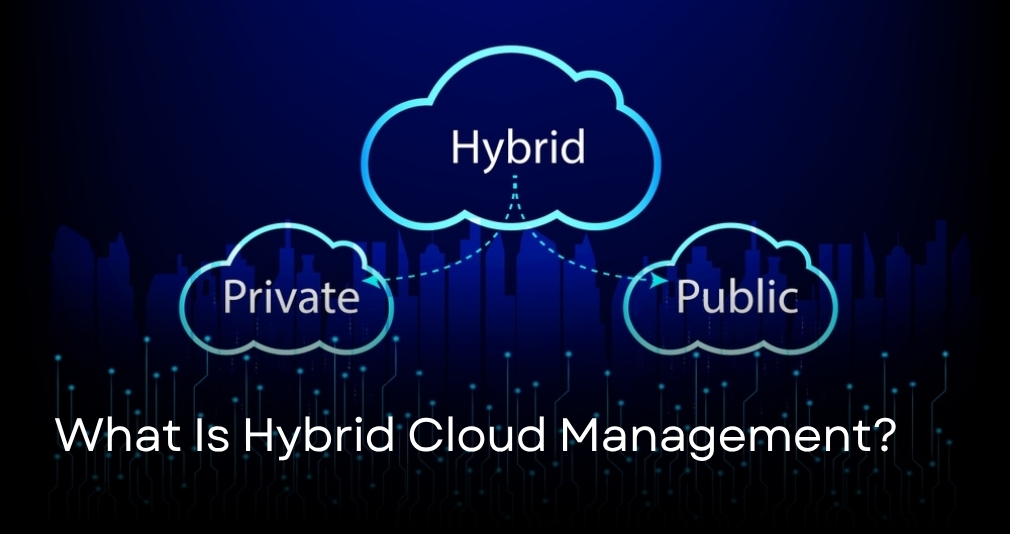
What Is Hybrid Cloud Management?
Hybrid cloud management means managing and controlling IT resources through monitoring and IT service administration across hybrid cloud systems. These environments typically include:
- On-premises infrastructure
- Private cloud platforms
- Public cloud services
- Edge computing environments
The goal is to create a unified system that allows organizations to manage workloads seamlessly across all their computing environments. Companies use central management systems with automation tools because they want complete control over their entire operational systems. This approach makes it easier for IT teams to handle their work because it improves application management, data processing, compliance tracking, and security protection.
Through hybrid management , businesses gain the ability to move their workloads among various work environments according to their operational needs, financial requirements, and protection standards.
Why Businesses Are Moving Toward Hybrid Cloud Models
Modern organizations need infrastructure systems that enable both innovative development and capacity expansion and protection against operational failure. The hybrid cloud model provides organizations with environmental selection freedom, which enables optimal workload deployment.
Organizations should use multiple infrastructure systems to achieve their application and service distribution goals across different operational environments.
The approach provides multiple operational benefits to organizations as follows
- Improved scalability
- Faster deployment cycles
- Better workload flexibility
- Reduced infrastructure costs
- Enhanced business continuity
- Greater disaster recovery capabilities
Remote work, global operations, and digital customer experiences receive better support through hybrid cloud environments.
Hybrid cloud strategies have become the standard solution for organizations that need to balance their performance needs with their need to control operations and their desire for agile operations.
According to Rackspace’s 2025 State of Cloud Report, over 90% of IT leaders plan to change their cloud strategies within the next two years, with hybrid cloud becoming a key priority for enterprise IT operations.
The Growing Complexity of Hybrid Cloud Operations
Hybrid cloud environments offer flexible operational capabilities. However, they create new challenges that require organizations to manage their operations. The organization needs a centralized management strategy because its multiple hybrid cloud management platforms and vendors, security frameworks, and applications make management difficult.
IT teams encounter these operational problems:
- Fragmented visibility across environments
- Complex security management
- Rising cloud costs
- Inconsistent compliance policies
- Data silos
- Performance monitoring challenges
The organization needs effective resource management because cloud sprawl occurs when organizations lose control over their cloud resources, which leads to higher operational expenses and lower operational efficiency.
The cloud management solution integrates monitoring and automation, governance, and orchestration into one complete operational system.
Simplify Your Hybrid Cloud Operations
Improve scalability, security, and performance with expert hybrid cloud management solutions tailored for modern businesses.
Book a Free Cloud ConsultationKey Benefits of Hybrid Cloud Management
A strong cloud management strategy delivers both technical and business advantages.
Centralized Visibility and Control
The main benefit of cloud management systems is that they provide unified monitoring capabilities to manage multiple cloud environments.
The IT teams can track all system components through their unified dashboard, which displays workload status, infrastructure condition, application performance, and resource consumption. The system leads to better operational efficiency because it simplifies tasks and provides decision support.
Centralized management enables organizations to detect problems more rapidly while maintaining their operational processes across different environments.
Improved Scalability
Business demands can change rapidly. Organizations can adjust their resource capacity through hybrid management according to their current workload needs.
Organizations can access public cloud resources during peak periods while operating their protected workloads on private networks.
The system enables operational enhancements through flexible resource management that eliminates the need for additional infrastructure expenses.
Better Security Management
Security remains a major concern for organizations operating across multiple environments.
Cloud management enables organizations to implement unified security controls, which include identity management, encryption methods, access controls, and active threat detection systems.
Organizations can implement consistent security standards across private clouds, public clouds, and on-premises systems. The system reduces security weaknesses, which boost the overall cybersecurity defense capabilities of an organization.
Cost Optimization
Managing cloud costs across different providers can become complicated. Hybrid cloud management tools help businesses monitor resource consumption, eliminate unused services, and optimize infrastructure usage.
The system enables organizations to control their expenses while their operational effectiveness improves.
Enhanced Application Performance
The current requirements of modern applications demand both constant availability and immediate response times.
Hybrid management enables businesses to deploy their workloads across multiple environments, which provides optimal performance results.
Continuous application monitoring enables organizations to discover performance obstacles while they work to enhance their users' experience.
Support for Digital Transformation
Digital transformation needs infrastructure that enables businesses to drive innovation while maintaining operational flexibility. Organizations can achieve better application modernization and automation adoption, and cloud-native technology integration through hybrid management.
The system establishes a base that enables businesses to expand their operations while maintaining flexible business functions.
Security Challenges in Hybrid Cloud Environments
The hybrid cloud systems allow organizations to choose their preferred operational methods, but these systems create new opportunities for cyber attackers to compromise system security.
The system operates through three elements, which include data transfer between different platforms and system access by users from remote locations, and the functionality of applications in different geographical locations
The security challenges that organizations encounter include the following security issues.
Misconfigured Cloud Resources
The presence of sensitive information becomes exposed through insecure cloud settings, which result from incorrect system setup.
Organizations need to establish proper cloud environment configuration procedures, which require ongoing system monitoring for effective security measures.
Identity and Access Management
The process of user access management becomes complex when users need to access different systems.
The hybrid cloud management platforms enable organizations to enforce access control policies based on user roles while also enhancing their identity verification protocols.
Compliance Requirements
Companies that work in regulated sectors must adhere to established data protection and security regulations.
The hybrid management system enables organizations to maintain their compliance status by applying uniform governance rules throughout their different operational environments.
Data Protection
Organizations consider data security their most important operational goal. Organizations need to use encryption and secure backup hybrid cloud solutions while also implementing real-time monitoring systems to protect their sensitive data across hybrid cloud systems.
Building an Effective Hybrid Cloud Management Strategy
Organizations need to combine technology with trained people to achieve successful cloud management. The organizations need to create a strategic plan that connects their infrastructure choices with their business objectives.
Assess Business Requirements
Each organization requires its own unique set of operational requirements. The businesses must determine which workloads need high security, scalability, and performance before making hosting decisions.
Define Governance Policies
Operational stability across different environments depends on organizations maintaining specific governance procedures. Organizations need to develop rules that define their security requirements and compliance obligations, resource distribution, and workload control procedures.
Prioritize Security
Hybrid cloud environments need security measures to protect all their components. The businesses need to implement security monitoring systems and access restrictions, data protection, and threat identification methods.
Invest in Monitoring and Observability
The process of continuous monitoring enables organizations to track their system performance and operational status.
IT teams use observability tools to identify problems before they become major issues, which helps them sustain system performance.
Embrace Automation
Automation enables organizations to achieve higher efficiency while decreasing the need for manual work.
Organizations should use automation to handle their standard processes because it will enhance their capacity to grow and be more reliable.
The Future of Hybrid Cloud Management
Businesses today continue to adopt AI, edge computing, and cloud-native technologies, which drive ongoing development of hybrid cloud solutions.
Future hybrid cloud environments will focus on six main areas, which include:
- AI-driven automation
- Predictive analytics
- Intelligent workload optimization
- Advanced cybersecurity
- Real-time observability
- Edge integration
Organizations today seek unified platforms that provide operational simplicity while enabling them to grow their business and develop new products.
The rapid growth of digital transformation will make cloud management essential for modern IT strategies.
Final Thoughts
The current digital environment requires businesses to adopt hybrid management as a critical operational tool. Organizations require infrastructure cloud management solutions that provide them with flexibility and security while delivering scalable systems at an affordable price point to meet their long-term business requirements.
Organizations need centralized systems that enable them to track their operations while using automated systems and advanced hybrid cloud management tools to uphold their performance standards.
The implementation of a structured hybrid cloud management approach enables organizations to achieve operational efficiency, improved security, and cost savings while they modernize their applications. Hybrid cloud management software will become a critical component that helps organizations build IT systems that can withstand future challenges as companies adopt cloud-first approaches.
At Saffron Tech, businesses can use modern cloud knowledge together with digital transformation cloud management services to develop adaptive hybrid cloud systems that provide security and operational flexibility.
Build a Secure & Scalable Hybrid Cloud Infrastructure
From cloud optimization to security and automation, Saffron Tech helps businesses manage complex hybrid environments with confidence.
Talk to Our Cloud Experts
He has been an integral part of the tech department at Saffron for the last 7 years in the capacity of a Project Coordinator. With a strong educational background in graphics and computers, he has been instrumental in seamless conduction of multiple technical projects. Throughout his career, Praveen has demonstrated an exceptional ability to oversee and streamline project activities, ensuring efficient execution and optimal resource utilization. With his strong project management skills and attention to detail, he has consistently ensured smooth coordination and efficient delivery of projects.
His technical acumen and attention to detail enable him to navigate intricate project requirements and deliver innovative solutions. He remains up-to-date with the latest industry trends and emerging technologies, leveraging this knowledge to drive continuous improvement in project execution. With a focus on delivering successful outcomes, he ensures that projects are delivered within budget and meet or exceed client expectations.
Frequently Asked Questions


